
Current predictions suggest that we are entering another El Niño period, which typically results in drought across southern Africa. Some climate models are predicting that this will be a super El Niño
– stronger than most others on record. Is Namibia ready to face another drought period?
The El Niño event is a natural occurrence whereby the waters in the Pacific Ocean warm to above average temperatures. Because global weather systems are connected, this warming affects the climate around the world while it lasts. For southern Africa, this usually means drought conditions.
The opposite phase, known as La Niña, is marked by a cooler Pacific Ocean. Having just come through a relatively weak La Niña that brought good rainfall to Namibia, our rangelands are currently looking beautifully green. This is not a time to be complacent, however, especially if a super El Niño
is waiting around the next corner.
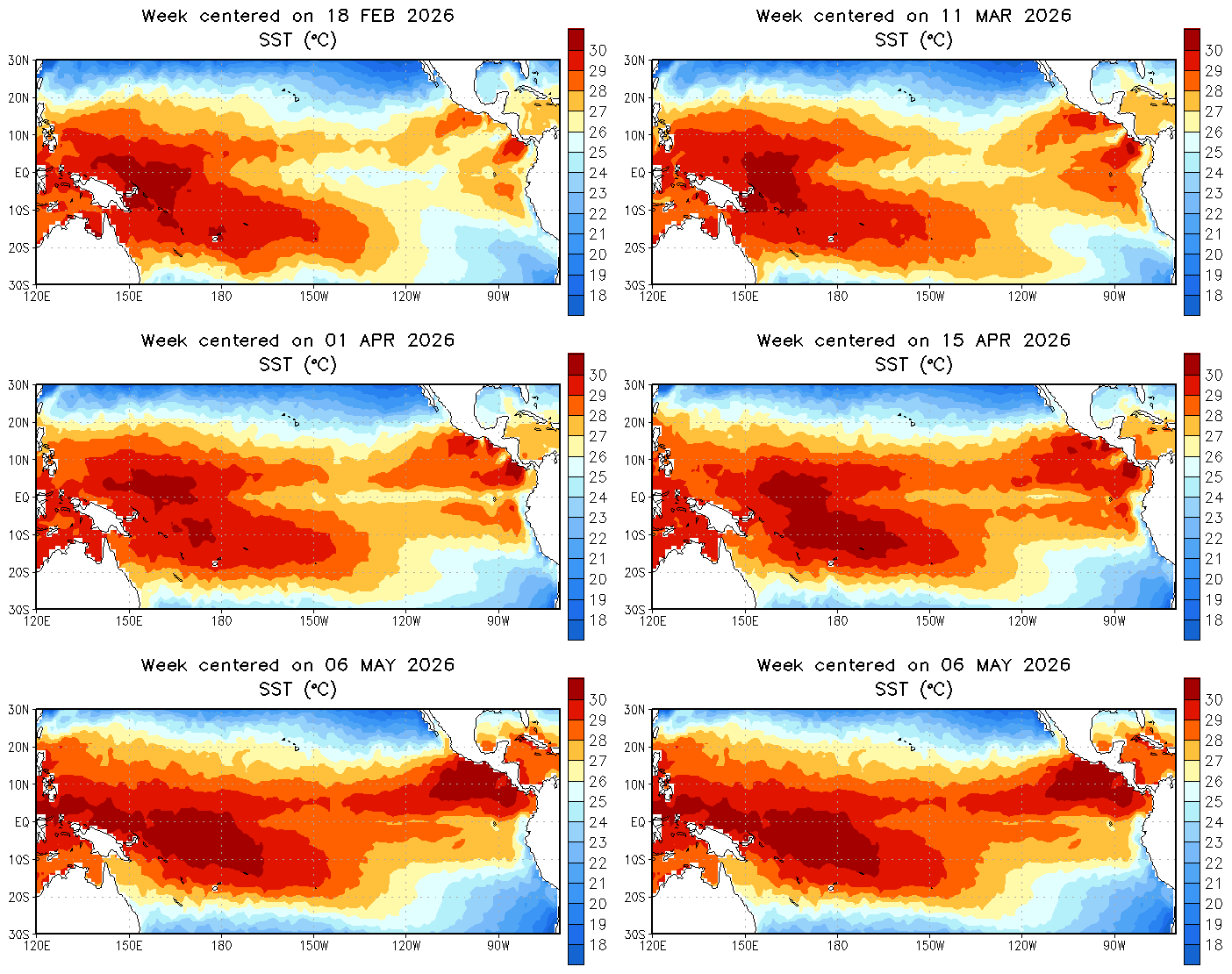
How do we know when El Niño is coming?
Before modern day weather monitoring systems, one couldn't plan in advance for events like El Niño. Today, we have little excuse to be unprepared. Monitoring data from the Pacific Ocean and interpretations of those data are available online through the US National Oceanic and Atmospheric Administration (NOAA) and other sources. Their predictions for the coming year are updated monthly, allowing anyone to see whether the coming season will be El Niño, La Niña, or neutral. A South African Agricultural service also provides regular El Niño updates in Afrikaans.
The May 2026 predictions released by NOAA (graph below) make for sobering reading for Namibians. There is greater than 80% chance of switching from 'neutral' to El Niño during the months May-July. The NOAA models predict an over 30% chance of very strong
or super El Niño
, while the latest models from the European Centre for Medium-range Weather Forecasts (ECMWF) predict a 100% chance of a super El Niño developing by November 2026. The Pacific Ocean seems likely to break historic records during this time.

What does this mean for Namibia? One important note: the strength of El Niño doesn't correlate perfectly with the severity of drought. While the year of a very strong El Niño event is almost guaranteed to be drier than average, it may not be among the driest on record. Much depends on how early or late in the season the weather system develops – early development (as is likely this year) generally results in worse drought conditions.
Weather events are notoriously difficult to predict with accuracy many months in advance. This is why the monthly updates are useful – predictions become more reliable the closer we get to the events. Namibian farmers, wildlife ranchers, conservancy committees, protected area managers, national ministries, municipalities and local authorities, regional governors and councillors should therefore be regular visitors of the NOAA site to keep track of El Niño developments.
What can we do to plan for drought in advance?
At this stage, we can say with relative confidence that next season's rainfall will be below average. This good year will buffer the effects of a below average year, but if it is followed by another year of El Niño (as happened in 2019-20), the situation will start to look bleak.
Given the regularity of the El Niño cycle (see graph below) and Namibia's vulnerability to drought, preparing for its impacts should be part of the normal planning and operations of all of the government and non-government stakeholders mentioned previously. These should be ramped up ahead of an El Niño year to ensure that systems to cope with drought are in place early, rather than as a late reaction to 'surprising' drought conditions.

Farmers and wildlife ranchers can buffer themselves against drought in the 2026-27 rainy season by saving any extra income from the good 2025-26 season's cattle or game production and sales. Early stocking adjustments prior to an El Niño drought may also be sensible, depending on local rangeland conditions.
Similarly, communal conservancies can set up savings accounts for drought relief for their members, with clear rules about when relief will be triggered and what members will receive during the drought. Communal area residents and traditional authorities should also be looking at livestock numbers and agreeing on protection of pastures for dry times ahead.
Protected area managers must continue to monitor and, if necessary, manage game populations to ensure long-term sustainability. Fenced wildlife is the moral responsibility of the owners and custodians. The most important adaptation of wildlife in arid areas is mobility – their ability to move to areas with grazing and water. By fencing in wildlife, this adaptation is removed. Thus, stocking rates need to be carefully monitored and managed to avoid mortality.
The Ministries of Environment, Forestry and Tourism (MEFT), and Agriculture, Fisheries, Water and Land Reform (MAFWLR) must support the farmers, conservancies, and protected area managers as required. This might require greater flexibility with regard to offtake permits, marketing arrangements while animals are in good condition and prices are high, among other initiatives.
Game, livestock and land management options should be explored to increase resilience to drought. Whether this takes the form of grazing plans, game translocations, opening up areas through collaborative mechanisms, recognising freehold conservancies, establishing (or closing) boreholes, will depend on the needs of each area.
The Office of the Prime Minister, regional governors and councillors must use the information gained from previous drought relief efforts combined with other knowledge to identify especially vulnerable areas and people groups within their regions. Relief efforts aimed at the most vulnerable early in the drought period are more effective than general relief that comes too late.
In terms of water management, NamWater, City of Windhoek and other municipalities must maintain a close watch on water use and leakages to prevent a water crisis in the later stages of a drought. Some original ideas around incentives for water saving, introduced at an early stage in the cycle, would be useful. For example, a 10% saving on a household's water use in June 2026 compared to June 2025 would result in a 10% reduction in the water tariff (N$ per cubic meter used) – and this could be applied for each month, and for all water saving amounts – linking % tariff reduction to % water use reduction.
Conclusion
It is time for Namibia to become proactive about droughts. Weather forecasts are much more accurate than they have ever been before, and the coming super El Niño
will almost certainly bring another drought. Possibly a severe one. All Namibians – whether urban or rural – and all institutions within and beyond government should start thinking of ways to increase individual and national resilience to drought.
For articles on similar topics, please click one of the following options:
If you enjoyed this page, then you might also like:


We use cookies to monitor site usage and to help improve it. See our Privacy Policy for details. By continuing to use the site, you acknowledge acceptance of our policy.